
Many industrial facilities rely on sensitive electronic equipment, where malfunction or failure can result in costly downtime and production losses. One of the primary causes of equipment failure is the build-up of static electricity.
Antistatic (ESD conductive) flooring is a specialised resin flooring system designed to safely dissipate electrostatic charges. It consists of high-performance polymer materials combined with conductive components that provide controlled static discharge while maintaining excellent mechanical and chemical performance.
We offer advanced Flowcrete Peran ESD SL and Peran ESD STB flooring systems, specifically developed for environments where electrostatic protection is essential.
Key Features of Flowcrete Antistatic Flooring
- Electrostatic discharge (ESD) protection – prevents the build-up of static electricity and safely dissipates electrostatic charges.
- Compliance with international standards – Peran ESD SL complies with EN 61340-5-1 and EN 61340-4-5, while Peran ESD STB complies with EN 100015-1 and SPIKE 1990:09.
- High mechanical durability – withstands heavy mechanical loads and continuous traffic from industrial vehicles.
- Easy maintenance – seamless surface provides excellent hygiene and simple cleaning.
- Water and moisture resistance – impermeable surface protects the concrete substrate from moisture penetration.
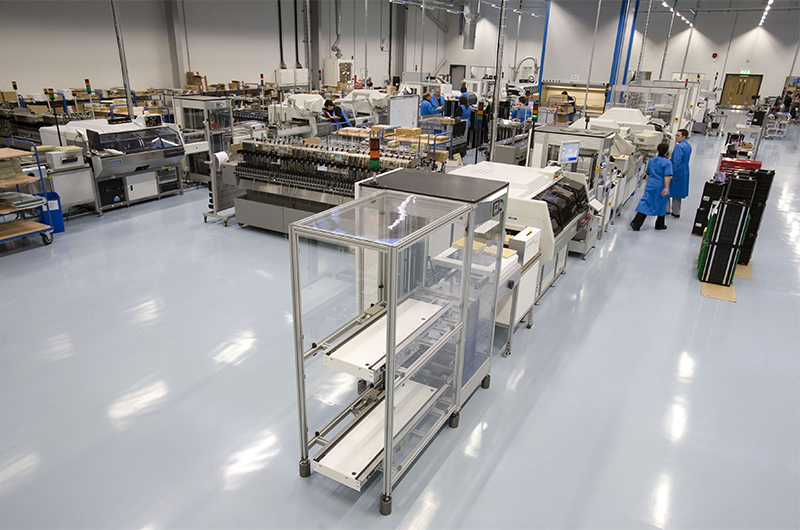
Where are antistatic floors installed?
Antistatic flooring systems are designed for environments with strict requirements for hygiene, cleanliness, and electrostatic discharge control. They are therefore commonly used in medical facilities and research laboratories, where regular disinfection and sterile conditions are essential.
Another key application is in facilities containing sensitive electronic equipment. In the electrotechnical industry, antistatic floors protect both equipment and personnel from electrostatic discharge, reducing the risk of failures and production downtime.
Due to their spark-free properties, these systems are also suitable for explosive environments, such as chemical storage facilities or specialised industrial plants.
An additional advantage is that antistatic surfaces do not attract dust, making cleaning and maintenance significantly easier. Therefore, they are also widely used in:
- food production and catering facilities,
- warehouses and technical rooms with high dust levels,
- healthcare and laboratory environments.
Installation steps for antistatic flooring
- Preparation and conditioning of the concrete substrate
- Grinding and levelling using specialised equipment (e.g., Blastrac)
- Application of penetrating primer Protop 1000 to improve adhesion
- Installation of copper grounding tape
- Application of conductive primer (Peran ESD Primer)
- Installation of the main polymer layer
- Final surface finish
You can order antistatic polymer flooring services from our company. You may submit a request via our website or by contacting our manager using the phone numbers listed on the website. Our team will provide all necessary information and prepare a tailored quotation for your project.